How to get your SIN in Moncton, Fredericton, Halifax, and Charlottetown
Your Social Insurance Number (SIN) is the very first document you must secure upon arriving in Atlantic Canada. It is a nine-digit number required to work in Canada, receive government benefits, and file taxes.
Whether you have just landed in New Brunswick, Nova Scotia, or Prince Edward Island, the process is straightforward but knowing exactly where to go saves you time and stress.
1. What is the SIN and why do you need it?
The SIN is your key to the Canadian economic system. You need it for:
Employment purposes (your employer will ask for it).
Applying for government programs (like the Canada Child Benefit).
Opening bank accounts and filing tax returns.
2. Documents required
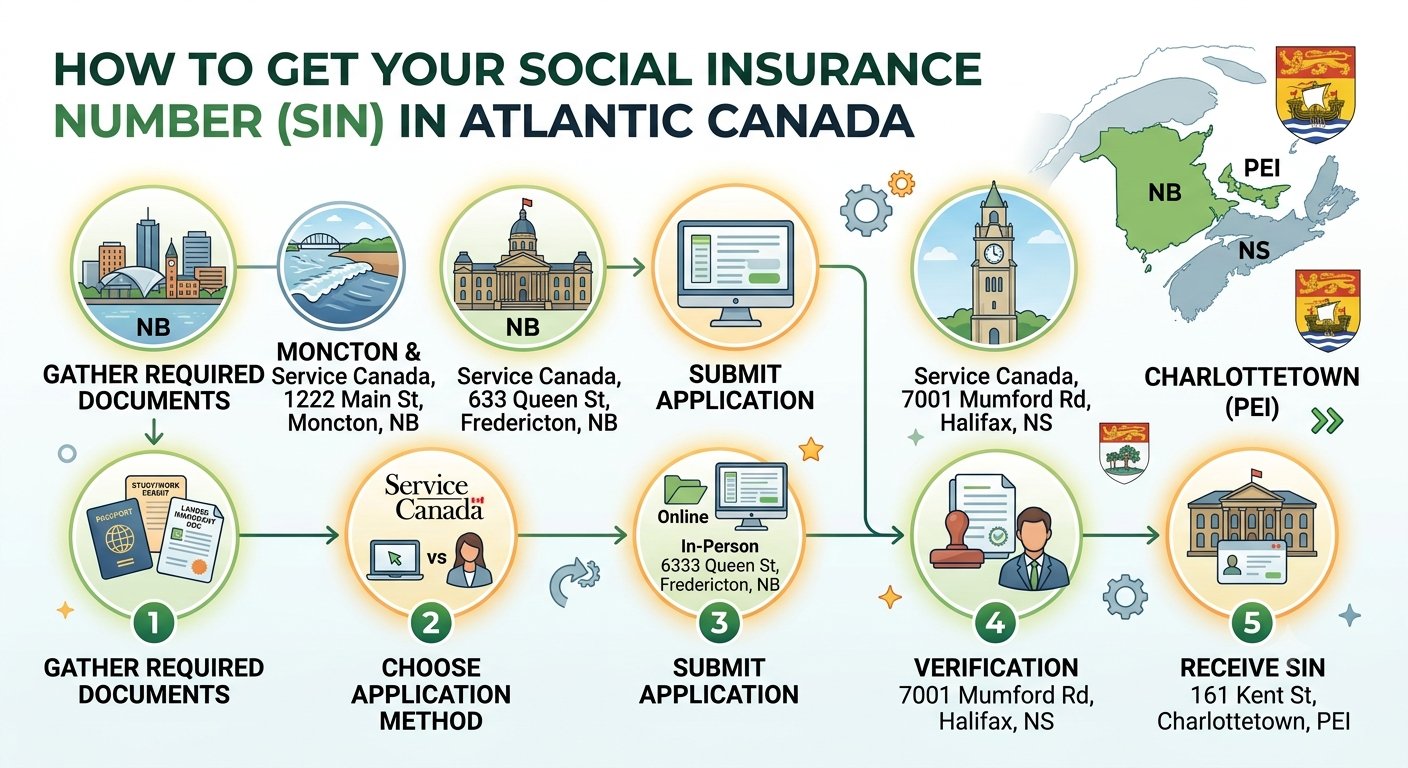
To apply for a SIN, you must provide a primary document that proves your identity and legal status in Canada. Typically, this is your work permit or study permit issued by Immigration, Refugees and Citizenship Canada (IRCC).
3. Where to go: Service Canada Centres
You can apply in person at any Service Canada Centre. Here is where you can find them in the main hubs of the Atlantic provinces:
Moncton, NB: Located centrally to serve the growing immigrant population in the city.
Fredericton, NB: Accessible for those settling in the capital region.
Halifax, NS: The major hub for new arrivals in Nova Scotia.
Charlottetown, PEI: The primary location for newcomers arriving on the island.
Pro-tip: Check the official Service Canada website for current operating hours, as they can change.
Getting your SIN is just the beginning. Once you have your paperwork sorted, the real challenge is finding the right community, understanding local housing, and connecting with employers.
At Atlantino, we specialize in helping immigrants like you bridge the gap between arriving and thriving. From finding designated AIP employers to understanding the cultural nuances of your new city, we have the resources you need.
Check out our community directory and resources here to find businesses, professional associations, and support networks that will make your transition to Atlantic Canada much smoother.